Weight Loss As A Woman: The Hormonal Perspective That Changes Everything
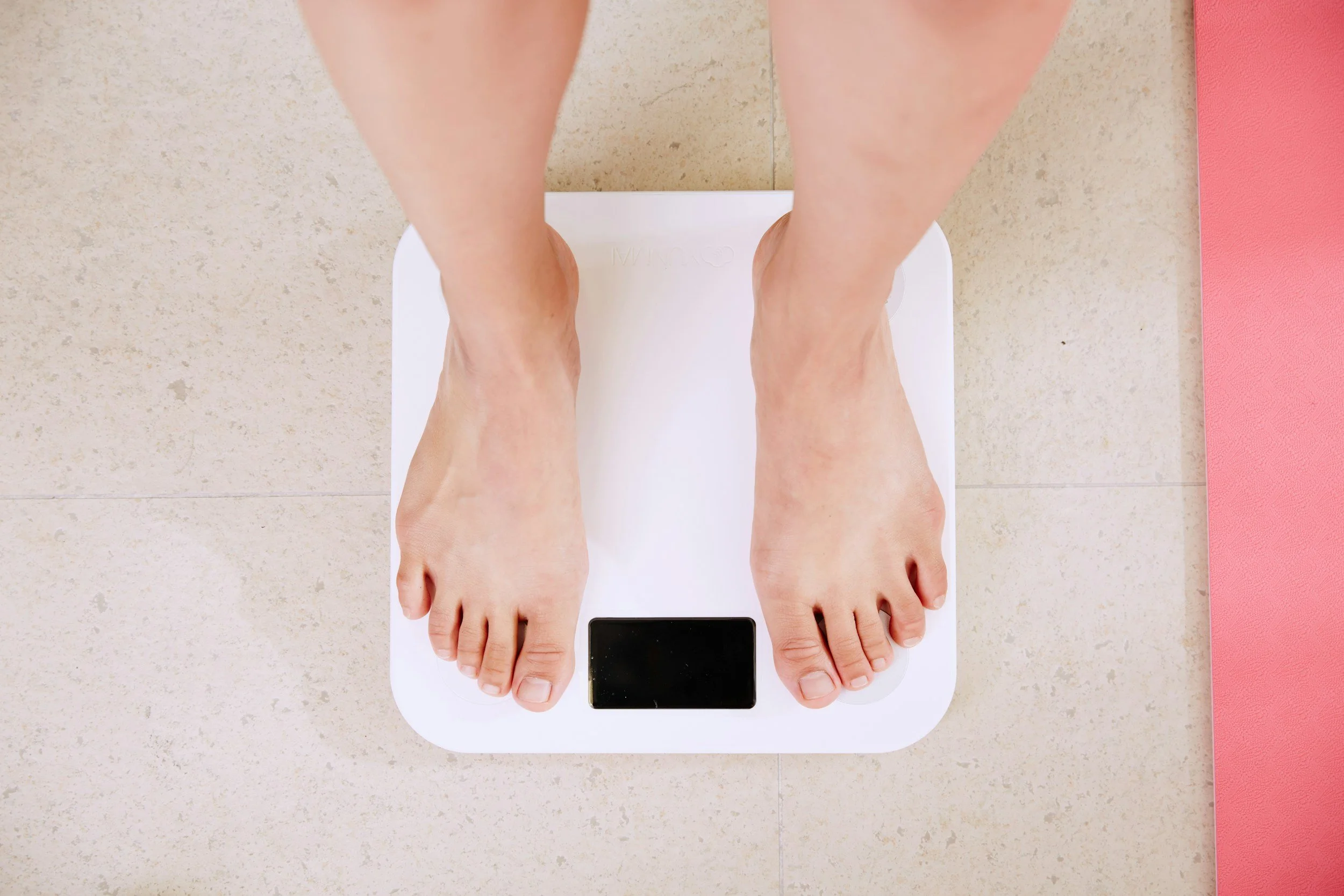
Ah, the old scale battle.
I do not know one single women who has never at least once in her life struggled with her weight.
I have rarely heard, from the women around me, that they were so happy with their weight.
But here’s the thing… beyond the messed up body image standards society is trying to coerce us into, there is also a pervasive and miseducated system that overlooks the complexities of a woman’s body, and leads us to believe our fight is with our scale instead of with a lack of understanding.
A few of my clients come to me because they want to lose weight, suspect it’s hormonal, and are drained from their experience of little support on how to navigate this whole topic.
One of my clients came to me to get pregnant, but knew that obesity was in the way of her achieving that dream.
She had been told by her doctors that she needed to eat less and workout more. She was given medicine to cut hunger. They said it would improve her chances at getting pregnant.
Yet she was not prone to overeating at all. She was already eating whole foods with very little sugar, drank herbal tea daily, and was an aqua-pilates instructor.
She was also diagnosed with PCOS, had her fallopian tubes collapsed after the surgery to remove her cysts, and regular anxiety. All pieces of information that influence her body’s weight mechanisms and fluctuations.
Yet she was only told to eat less and move more.
The advice she was given to lose weight failed to take into consideration the complexity of her systems and the delicate balance of her hormones. And she’s not the only one with such uneducated advice.
Another one of my clients was told by doctors that she was obese and needed to lose weight if she didn’t want to have to go through surgery.
Again, no other help was offered other than take medicine, eat less, and move more.
In our work together, I suspected more was at play, and encouraged her to get her liver checked. As it turns out, she suffered from non-alcoholic fatty liver disease and was almost pre-diabetic, making it impossible for her to simply lose weight by taking medicine.
The myth of eating less and working out more is outdated for women.
This idea oversimplifies the complex nature of a woman's metabolism and ignores critical factors such as hormonal imbalances, or the impact of stress on the body.
Hormones like estrogens, progesterone, insulin, and thyroid hormones significantly influence metabolism, appetite, and fat distribution.
Their balance and flow within the body have a greater impact on weight than the amount of calories ingested.
While a man may lose weight by eating more protein and going out for runs, a woman, with the same changes, may notice an increase in fat around her thighs and stomach due to the action of her hormones on her system.
If her stress levels are high, working out heavily and reducing her calories intake will not only force her body to store more fat, but will further increase the production of cortisol (a stress hormone) and keep her in a vicious loop of weight gain.
The advice of eating less and working out more then becomes not only ineffective, but potentially harmful, and creates the opposite effect.
Stress plays an incredibly important role in female metabolism.
Under the effect of stress, a woman’s body releases hormones that tell her system to store fat, protect her vital organs behind layers of fat, and to avoid wasting energy on non-essential tasks (such as feeling happy, being focused on work, or remembering someone’s birthday).
One of these hormones is cortisol.
Cortisol is released in higher quantities when the brain perceives stressors to be dealt with. This slows down the digestion, increases inflammation, and deactivates a high functioning metabolism. When this is the case, the body will do anything to store energy and to protect vital organs behind layers of fat.
We then have a case of extra weight that won’t disappear with diet and movement.
In a modern world where expectations are high - where one is expected to be great at everything, from career to parenting to education - the nervous system is seldom operating at a normal range.
It is either hyper-activated and functions with high adrenaline and cortisol, or it collapses after being overly activated and falls into an under stimulated mode. This is typically when women feel burned out, unmotivated, and unable to move. Any attempt at working out during this time will cause more stress.
A modern woman will typically move from being overly activated to being understimulated, and spend very little time in the middle range, where her nervous system is properly regulated. These extreme fluctuations keep her in a state of stress and her body releases many different hormones as a response to that.
This is why the advice of understanding your own body and addressing your imbalances will have a much bigger impact than eating and moving better. It is not about how much you eat and move, and it is about WHAT you eat and HOW you move that makes the difference.
Are you eating according to your needs, reality, and imbalances? And moving to support your body’s system in their current state?
For women with high stress, slower movement focusing on the breath will have a greater and more positive impact than HIIT or gym workouts. And this is just one example to show how unique each situation can be.
Advice for women struggling with being overweight should be to ignore the trendy and outdated ideas, and to rather focus on rebalancing their bodies in their primal functions.
This also moves the focus away from weight and self-image, and puts it back on health and radiance.
The best gift a woman can give herself is the reclamation of her own health - away from the external trends and myths that move her further away from herself and happiness.
The topic of weight already carries so much tension. There is no need to add more to it by expecting great changes through outdated advice.
I hope this post helps you see that, if you struggle with extra weight, you are not broken. Your path to health is not one of intense regimens, but of reconnection to your body’s actual needs and balance.
Of course that’s a journey. It’s not always an easy one.
But it’s a doable one.
Easy Actionable Tip
If you’re starting on this journey, pick one of these three tips to start with. They can have great impact on your health and energy, and make it easier to take the next step:
Drink warm lemon water first thing in the morning
Every time you go to the bathroom, take one minute to breath slowly, allowing your stomach to fully expand as you inhale
Go for a gentle walk in nature once a day
And let me know how it goes!
Stay radiant ‹3