Is Coffee Bad For Me as A Menstruating Person?
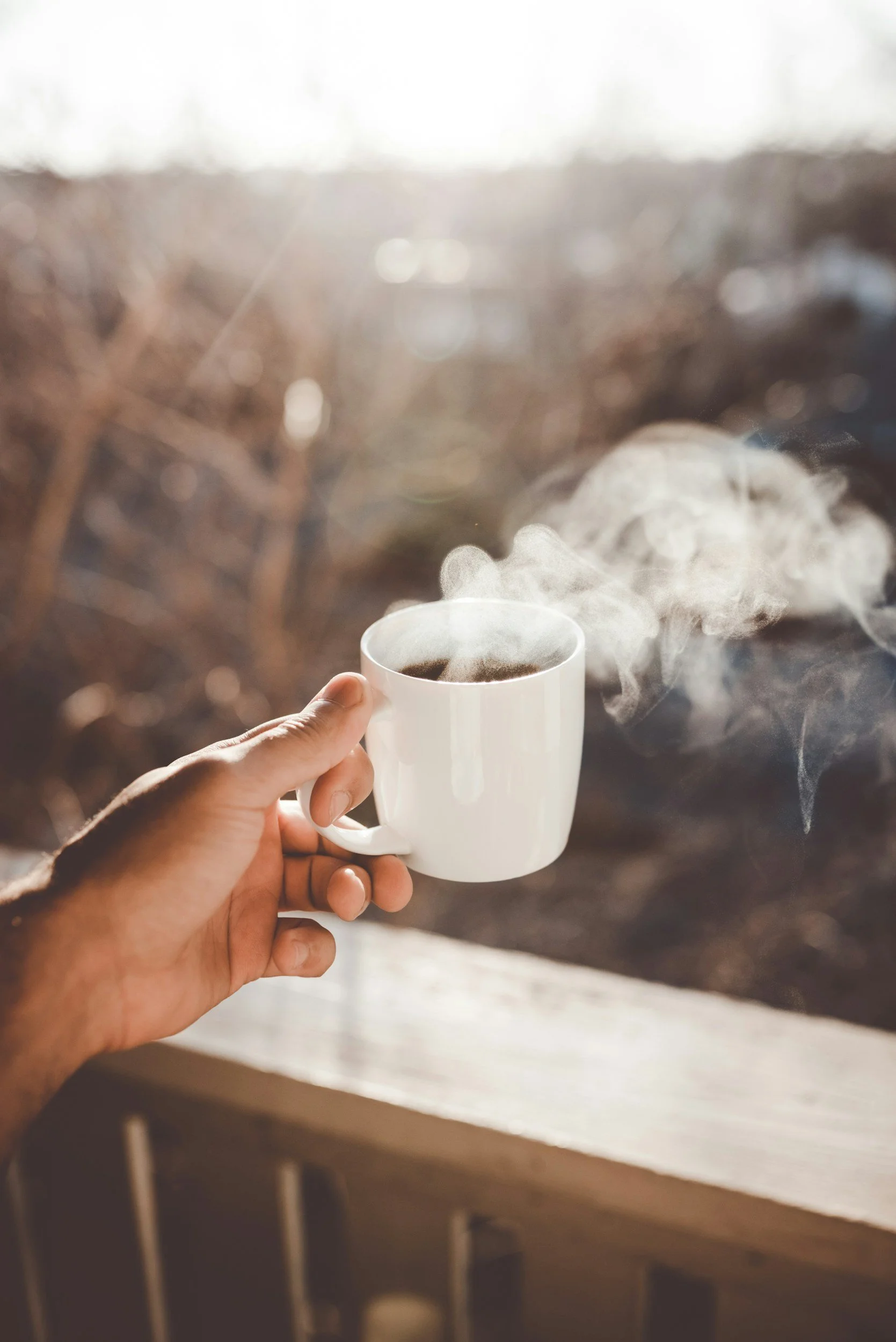
Let’s talk about coffee!!
I got a few questions about this lately, so let me share my full answer.
Is coffee bad for you?
As with everything I talk about in Spotless Girl’s world, the answer to this question is… well, that depends.
My story with coffee
I didn’t really drink coffee until I turned 25. I liked a cup once in a while, and usually preferred a cappuccino, or the occasional iced latte. I liked the taste, but mostly I liked the vibe it gave me. It created a nice atmosphere, put me in a work vibe.
At that time, I noticed that I only reached for a cup after my ovulation was passed. Beforehand, I never really wanted to drink coffee, or didn’t like the feeling it had on my body.
With time, I started drinking more often.
When I got married, I started making coffee for my husband, and I drank one cup as well at the same time.
For me, coffee was attached to a vibe. I liked the way I associated it with a good session of deep work, and to the grateful kisses of my husband.
And then, surprisingly, my body started integrating coffee differently and, less surprisingly, it seemed to follow with my cycle.
Close to my period, I could barely feel its effects. Around my ovulation, my body hated it. I felt bloated, scattered, and my thoughts would fly all over the place. Before my ovulation, I would get stressed out physically, and before my period I would feel my stomach grumble.
So I stopped making coffee for myself. But since I still wanted to offer a cup to my husband, I bought some chicory coffee for myself. Basically, it’s chicory and other grains, roasted like coffee beans, and powdered. They taste similarly-ish to coffee, but have no caffein in them.
Since then, I no longer drink “real” coffee, apart from the occasional cup once in a few moons.
Following my body’s instincts and pairing them with my knowledge of coffee made it possible for me to choose an alternative that honors my body and needs.
I’m hoping this blog will help you shed some light, so you can also choose right for yourself.
Coffee’s history and effects
So what is coffee?
It’s a plant! I know it feels a little dumb to even mention it. But it’s important that we remember that coffee is actually a medicinal plant.
Originally, people brewed its leaves and made tea out of it. They did it because they could feel it help their energy levels throughout the day (we now know that the coffee plant is a stimulant).
The plant’s stimulant effect was discovered to be more intense when the berries were used: roasted, and blended into a dark liquid. This drink, being more intense than the tea, was used for rituals.
Their effects became so popular that the spiritual leaders wondered if the drink could be dangerous, and put it on trial. When the plant was deemed safe to drink, its uses spread even more, becoming a drink for all types of social gatherings.
With time, more and more empires began using coffee, and its history became tainted with slavery and destruction of nature (which is why seeking coffee with fair trade and sustainable titles does matter). Cultures moved away from the medicinal effects of coffee to its capacity to make money.
Which is why we still consume it today in it’s most intense form, and pay a hefty price to get a “good” one.
Marketing places it as a powerful drink, that we associate with productivity, luxury, coziness, and maturity - and that in itself is one of the reasons we consume so much of it.
Coffee is an emotional experience.
As well as a physical one.
As mentioned, it is a stimulant. A stimulant plant, in herbal medicine, acts on the nervous system, asking it to produce more stress hormones that will keep the body vitalized.
Coffee blocks adenosine, which is a molecule that helps the brain fall asleep.
It causes the nervous system to produce more dopamine, to make one feel happier and more energized.
As with most stimulants, coffee serves as an accelerator for the body. There are two main functions of the body accelerated by coffee, given that we drink it in its most potent form, and have, with time, modified to plant to be stronger and stronger.
Digestion - which is why you might notice that you go to the bathroom more often when you drink coffee
Liver detoxification (how fast your body gets rid of toxins or components).
In short, Coffe:
Helps the body produce cortisol and dopamine, which are energy (and stress) hormones. This can impact our heart rate too.
Accelerates digestion and liver detoxification pathways (how your body gets rid of all of its gunk).
Blocks adenosine, a molecule that helps your brain fall alseep.
So let’s look at what this means for us:
The nice sides of coffee
Now, being a plant, coffee contains something that is essential for the body: antioxidants.
And we want that! A drink that gives you some antioxidants is great.
And if it accelerates liver detoxification, that’s great too, IF you have all the resources your body needs to do healthy detoxification. If your body is filled of the right vitamins, and has them ready to be used by your liver at such a quick notice, then coffee helps you get rid of toxins faster.
And of course, it gives you energy.
3 main benefits of coffee: antioxidants, accelerates detoxification, and gives energy.
The “But” of Coffee
However…
If your body is already full of stress hormones, coffee will just push that level further, driving you deeper into imbalance.
If your body doesn’t have all the nutrients it needs, then accelerating digestion makes it even harder for your body to absorb all the nutrients in the food you eat, because it’s going through the motions faster than your body can catch up with (especially if it’s overwhelmed).
If your liver doesn’t have the right vitamins to detoxify, a rush of coffee will result in more physical stress, and an influx of things that just… can’t be detoxified. And when the liver can’t detoxify something, it wraps it in a layer of fat and sends it where it’s less likely to harm you, your butt and thighs (THAT is what cellulite is). Coffee would just manage to make that accumulate faster.
Another side of coffee is that it becomes a drug. Some of its effects are so strong, and taken so regularly, that the body stops doing some of these things on its own, and relies on coffee instead. This is when dependance becomes a thing.
So the downfalls of coffee: it pushes a depleted body further into depletion, and increases stress levels.
What about your cycle?
In my story, you’ve seen that my coffee absorption was different depending on where in my cycle I was.
That’s because our cycle governs the different systems of our body.
There are times in the cycle, the follicular and the ovulation phases, where your levels of dopamine and energy are higher than your lutheal and menstrual phases. Drinking something that creates more dopamine and energy could feel like too much at these specific times of the cycle.
Around your ovulation, your liver already has to work harder and faster to detoxify some of the hormones you’ve stopped producing.
So as you can see, coffee interacts differently with the different systems of your body depending on what is happening in your menstrual cycle.
This means that one would want to pay attention to the things happening in one’s body when deciding to take a cup.
Conclusion
So is coffee bad for you?
Well that depends:
Are you stressed a lot?
Are you lacking the nutrients you need for a healthy liver detoxification (iron, B vitamins, zinc, magnesium, glutathione, etc)?
Do you have a hard time digesting well?
Are you ovulating soon? Or recently?
Do you feel groggy if you don’t have your daily cup?
If you’ve answered yes to any of these questions, coffee is most likely giving you a disservice rather than supporting you.
And you would benefit more from having chicory coffee, a herbal tea, or an adrenal cocktail.
I hope this was useful in understanding what coffee does to the body! If you have any questions, or if anything was unclear, please reach out to let me know!
Stay radiant :)
Parting tip:
If you want to stop or reduce coffee, my greatest tip is to make sure you start your day with water, rather than coffee. Even better if that water is lukewarm and has lemon juice in it.