Cyclical Living Throughout The Seasons
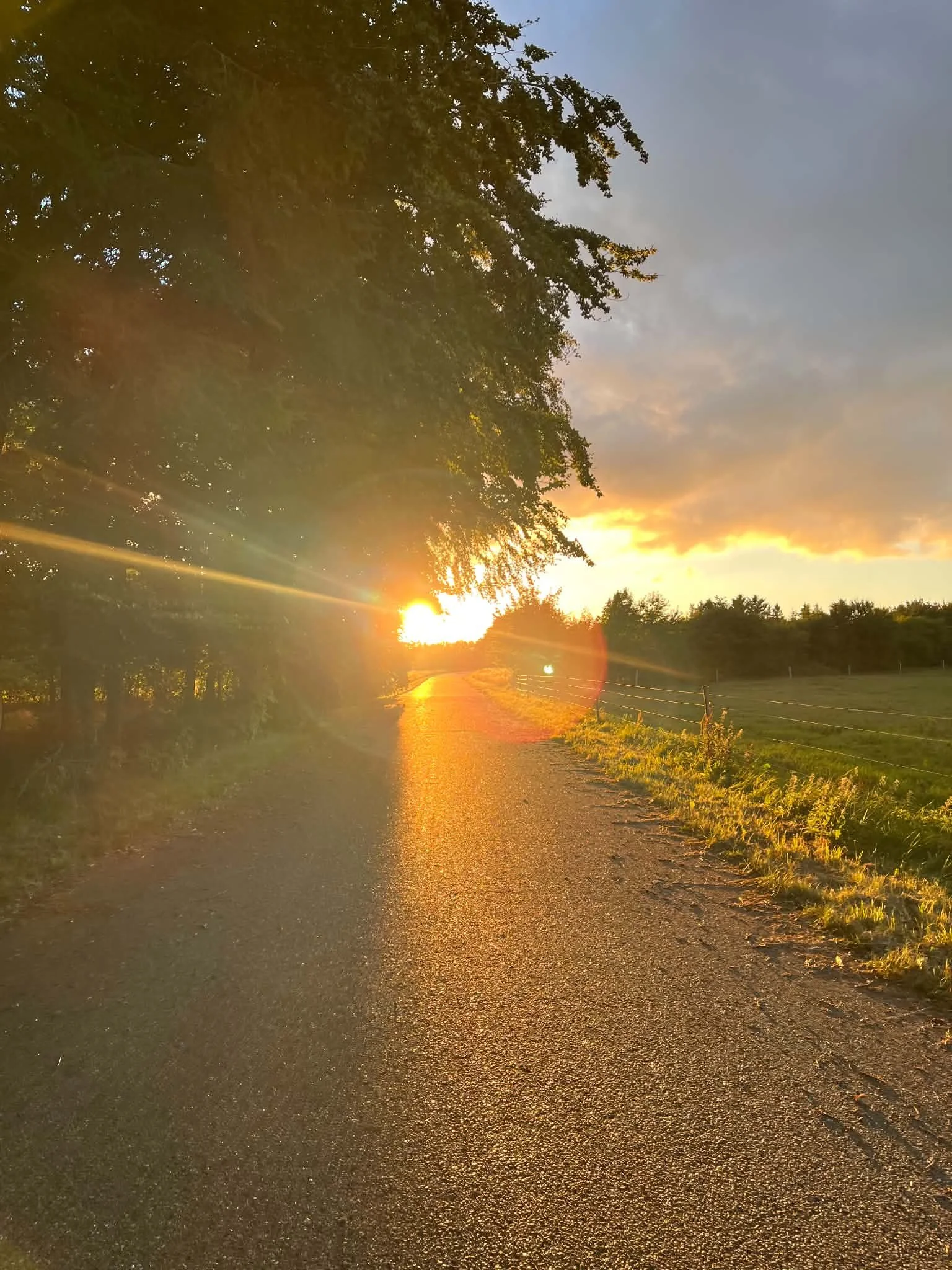
There is something incredibly attractive about change of seasons. When temperatures change, when activities and holidays change, when food changes. It fascinates me.
I also notice that I tend to be in my kitchen more often when the seasons transition. I get into some sort of “prep” mode and enjoy getting ready for the months to come. Each season carries something that I want to prepare for (cold with not a lot of food from the garden, or busy with a lot of gardening, etc.)
When I first started learning about the menstrual cycle, I learned that the cycle had multiple phases that could be related to 4 different seasons. I loved that imagery, because the seasons already felt so clear and so inspiring for me. To apply them to my cycle was a big game-changer.
I learned that the menstrual cycle’s fluctuations dictate a lot of the processes we experience on a daily basis. For example, rising estrogens strengthens the immune system while lower progesterone slows digestion down.
This brings changes in our body every month. Patterns are repeated, and hormones have different impacts depending on where we find ourselves in our cycle.
To take care of our cycle, or to embrace cyclical living, means paying attention to these patterns and nurturing them as they come in a month. To take care of our immune system when estrogens levels are decreasing, and give extra support to our digestive system when progesterone is at its lowest, is a good example of cyclical living. Not every day is the same, and our hormones help us know what is needed at what time.
However, it would be a mistake to assume that all cycles are the same. This is where the imagery of the seasons comes in handy, because not only are we experiencing small seasons every month, but we are also impacted by the real seasons in our environment.
Your cycle in August isn’t quite the same as your cycle in December.
Cyclical living goes beyond paying attention to the four phases of the menstrual cycle, because our body does not live in an isolated, sterilized office. The menstrual cycle is as impacted by the environment as it impacts us.
For thousands of years, women have lived depending on the changes of seasons. Our DNA is primed to follow their example. Our body has sensors meant to analyse the change in light and temperature, and make changes according to these. Our body knows when it needs to digest light berries and when it needs to digest heavier root vegetables according to the seasons. It knows when it needs to store fat and preserve energy, and when it can use all its energy on muscle building and staying outside for many hours at a time.
Our body has fine-tuned this balance for generations, and our cycle follows this balance just as much as the rest of the body.
Cyclical living suddenly becomes about paying attention to the changes outside of us, as much as the changes inside of us.
Following these changes, both inside and outside, allows us to give our body what it needs, when it needs it, and enables it to keep the fine-tuned balance of life to its best. We prevent many symptoms this way.
Cyclical living leads to a life that feels connected to your body and to nature, and therefore feels more honoring of both.
So here are ways we can start embracing cyclical living throughout the seasons:
Eat in-season and local food
In herbalism, we learn that the plants that grow around you have had to adapt to the same environment and circumstances as you, and therefore are more likely to contain exactly what you need.
That is why stinging nettles that grow in the harsh and colder environment in Quebec contain different nutrients than the ones that grow in more temperate places of Europe.
Beyond the environmental impact of buying local and in-season, we strongly benefit from this because the body gets to have the exact nutrients it has been trained to need for hundreds of years.
The body knows that in the winter, it needs more calories and more vitamin Bs, which is why it will prefer an orange to a cup of strawberries, even though they are both fruits that contain a lot of vitamin C.
Of course, this isn’t always possible, but the idea is to do this as much as possible. It’s also better for our own economy, as in-season foods tend to be cheaper.
Follow the Light
The body is capable of being awake for longer when the sunlight is up for a longer time. And vice versa, it needs more sleep when the sun is away for longer.
We know and feel how uncomfortable it is to be constantly busy after the sun is down. Our body struggles to keep up, because it has been trained to follow the natural light rhythms. And the intense lights that are constantly turned on in our houses and offices are only confusing it.
Dimming the lights earlier, and even going to bed earlier in the darker seasons, allows us to feel more energized during the day, while we need less sleep in the lighter seasons.
But it goes beyond sleep schedules, too. We can adapt our time management (as much as possible) by slowing down and spreading our activities throughout longer periods in the darker season, and being more social and active in the lighter seasons. Of course, this is different for every woman, but most women will benefit from slower winters and more social summers.
Honor the Senses
Use what is available in nature and in the seasons to speak to your senses. A great rule of thumb in cyclical living is to return to the senses, because they are tuned to the environment and to your body in ways we ourselves aren’t always.
By making sure we are nourishing and paying attention to our senses, we are giving our body more chances to follow the seasons.
Here are some examples of what I mean:
WINTER (in the northern hemisphere)
Touch: The temperature is lower, so the body needs more layers. Softer fabrics tend to keep us warmer.
Smell: The plants that are available are trees, often evergreens. They are aromatic plants, which means they offer medicinal benefits through their smell as much as their ingestion. Breathing pine and spruce helps to nourish the nervous system throughout the winter months.
Taste: Warmer and heavier meals are often available at this time. They give the body enough calories and the needed nutrients for the winter.
Sight: There are fewer colors and more darkness. We honor this sense by dimming the lights, using candles, and giving our eyes breaks from intense lights and colors. You might be surprised by how much your body was craving sleep by seeing how it behaves when you light candles instead of a big overhead light.
Hearing: Again, nature is more silent in winter. Silence invites us to take time with our own thoughts. Self-reflection is easier in the winter because our brain is used to doing it then.
SUMMER
Touch: Lighter fabrics feel nicer in the warmth. Natural elements are more often in contact with our skin (water, grass, sand, etc.), so we wear fewer layers in favor of more grounding with nature.
Smell: The flowers and fruit of summer are giving us the medicine we need for the summer. Lavender and chamomile, for example, support our nervous system through the busy season.
Taste: Fresh fruit and vegetables are available. The body needs more quick energy, and that often translates to smaller portions, but more often. They are often lighter meals than in the winter.
Sight: Nature offers us explosions of colors and light. It keeps our brain more awake and alert. Being outside often helps us ground and absorb all the vitamin D we need from natural light.
Hearing: More noises, more things happening. The brain has an easier time focusing for longer periods of time during the summer. It can take more stimulation (in general).
AUTUMN/FALL
Touch: Temperatures fall, the cozy levels go up. We’re in between crisp and fresh, and cold and gloomy. We’re slowly adding more layers, while keeping some of the lightness of summer.
Smell: It’s the season of baked goods and their smells. The air has a distinct smell of crispiness, and it’s time for harvesting the aromatic herbs (mint, thyme, oregano, etc). The more earthy plants and herbs give us medicine through our nose and taste.
Taste: Our body is starting to need more calories, but it still lingers with fresh ingredients. That’s why baking with fresh fruit and vegetables is ideal for this season. The food is getting warmer and heavier.
Sight: There are still colors, but the palette is getting more monochromatic. Intense, but simplified. Which is often a good parallel of what our brain craves in this season.
Hearing: The sound of crunched leaves as we walk is considered ASMR (ASMR stands for Autonomous Sensory Meridian Response, which describes a pleasant, tingling sensation that typically starts on the scalp and moves down the neck and spine, according to Wikipedia). Raindrops on a metal or glass roof. Wind blowing through the forest. Whatever sounds you associate with Fall that comfort you may be sounds your brain uses to activate your parasympathetic nervous response (which means your body goes into rest and digest mode).
SPRING
Touch: As the temperatures rise up, we’re still not yet in full heat, so we are keeping the layers, but may shed a few of them.
Smell: After the months of winter, there is a need to air out the space and welcome in freshness. That’s why people love to go on a spring cleaning spree. As the energy levels rise, we are capable of taking care of our environment a little more.
Taste: Spring is when we can collect a lot of new plants and sprouts, which carry a lot of nutrients. It’s a time of refill. Going for fresh and new plants is often exactly what our body needs at the moment.
Sight: Nature is reawakening. Green and colors are slowly coming back to the picture, and more light is coming in. With this, we might notice a rise in energy levels that encourage us to go outside more and start grounding once again.
Hearing: The birds are coming back, rivers overflow, people go outside. These are all sounds of awakening. In the same way that Fall sounds might activate our parasympathetic nervous response, Spring sounds might have the same effect. We nurture this by listening to sounds that calm us.
There are so many other ways to match our lifestyle to the seasons around us. Of course, it is highly dependent on where in the world we live! Places with two seasons carry different transition periods than places with 4 or more.
What matters is not to put ourselves into a set of rules, but to open our awareness to the outside cycles and see if they can have something to say about the way we live our everyday life.
To honor our body and to honor nature go hand in hand. They are moved by the same rules, and our lives are interwoven. Respect for one leads to respect for the other, which in turn leads to a more balanced life.
There is no need to become an isolated witch in the woods to experience balance with nature. By simply aligning a little part of our daily life to the seasons, we are already making a difference in our health.
Stay radiant
Audrey